

No Real Creators? Produce High-Converting User Generated Content Ads with AI
Your ad accounts are starving. You know user generated content ads are the key to trust and performance, but sourcing enough reliable UGC creators is a time-suck, and the good videos are always too expensive.
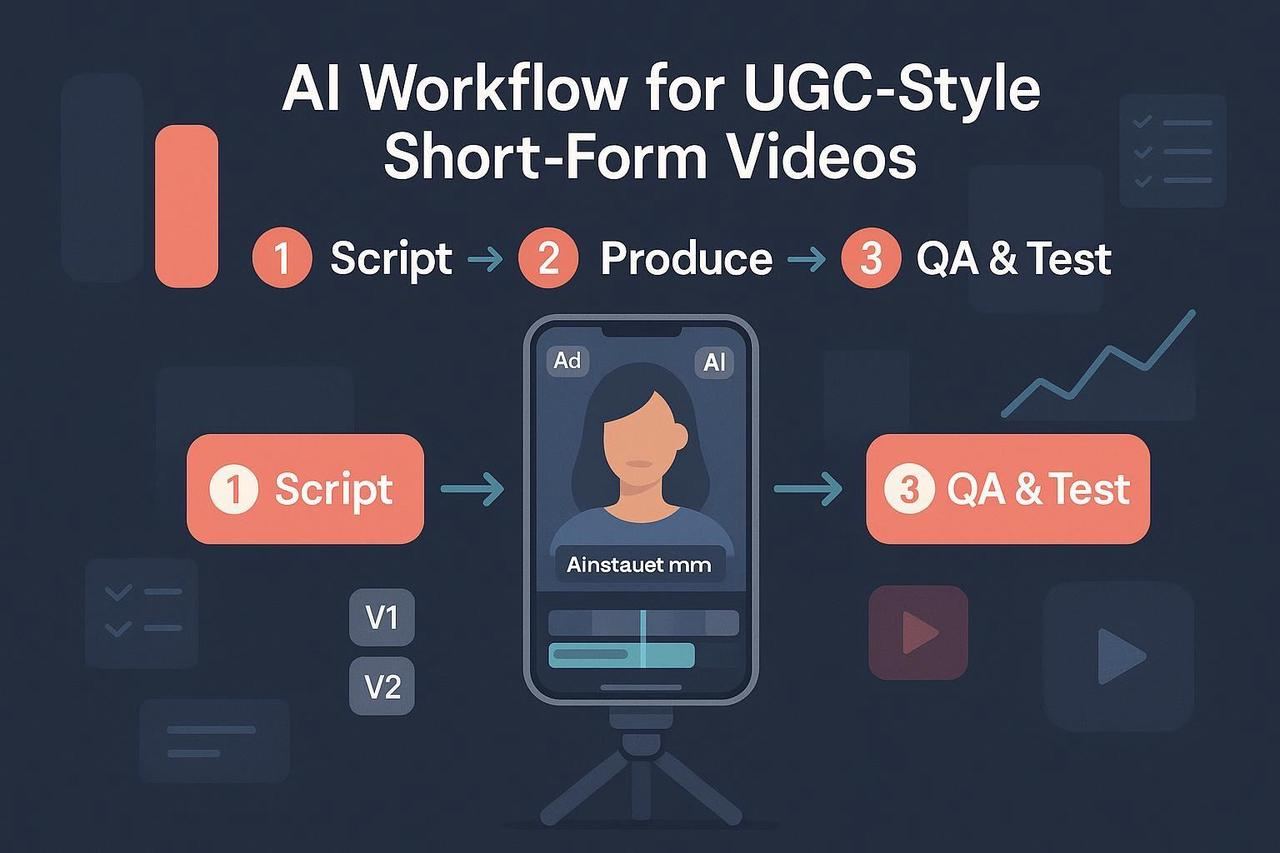
Stop waiting for a creator’s calendar to align with your launch. This guide shows you how can I leverage user-generated content in my ad campaigns by ethically creating high-performing, UGC-style video—fast and at scale. You’ll build a repeatable 3-step workflow that turns real customer voice into high-trust creative.
At a Glance
Difficulty: Intermediate (you know social ads basics)
Time to First Batch: 1–2 days (not weeks!)
What you’ll achieve: A consistent flow of high-performing UGC content that minimizes ad fatigue.
No creators? No problem. Produce 10+ UGC ad variants in minutes with NemoVideo’s AI video editor, swap hooks, reorder proof points, and optimize captions automatically for multiple platforms.
Step 1: Build Authentic Scripts from Real Customer Voice
You can’t fake authenticity. The secret to great UGC-style creative is starting with real customer signals—not imagination. That’s how you preserve truth while achieving the natural, high-trust look of a great UGC ad examples.
Listen to Your Customers
Your best inputs come directly from your audience. Gather raw, real inputs:
Pull Themes: Cluster recurring pains, desired outcomes, and proof points from approved reviews, surveys, and support tickets.
Map the Story: Decide which claims need substantiation. Avoid absolutes (“guaranteed,” “cures”) unless you can prove them. Remember, creating fake reviews or testimonials is explicitly prohibited by the FTC’s 2024 final rule.
Draft Modular UGC-Style Scripts
Use a simple formula that sounds human, not corporate.
Formula: Hook → Context → Pain → Proof → CTA
Example (Pain Relief): “I kept skipping sunscreen because of the chalky look. Then I tried a mineral option that goes on clear and doesn’t pill. If you’re picky like me, check this out.”
Essential Angles to Prepare (UGC Examples):
Pain-relief: “I struggled with X until…” (The highest-performing hook).
Comparison: “I switched from Brand A to B because…”
Demo/Unboxing: “Watch me try this in my routine.”
Quality Check: Are all claims truthful and supported? Have you planned exactly where your sponsorship and AI disclosures will appear, per the FTC’s Endorsement Guides FAQ?
Step 2: Produce UGC-Style Videos with AI and Version Rapidly
This is where your AI Creative Buddy transforms a text script into dozens of high-quality user-generated content ads. You choose the production path based on the realism you need.
The Production Paths
Voiceover + B-roll: Use a natural voice (human or AI) reading your script over product shots and lifestyle clips. (Pros: Fast, easy to localize).
Avatar Presenter: Use a consistent, on-brand avatar delivering your script, complete with b-roll and captions. (Pros: Consistent presenter, no scheduling talent).
Script-to-Video Assembly: Provide the script and assets; the tool assembles scenes, timings, captions, and transitions automatically. (Pros: Maximum speed and consistency).
Make it Platform-Ready in Bulk
You can speed up this step by using a tool that detects strong visuals, optimizes pacing, and generates bulk variants.
Pacing: Hit the first proof point within 3–5 seconds. Add quick b-roll beats.
Format: Vertical 9:16; use large, high-contrast captions for sound-off viewing.
Versioning Matrix: Cut 15s, 25s, and 35s edits. Swap hooks, first frames, proof point order, and CTAs.
Practical Micro-Example with NemoVideo:
Use NemoVideo, our AI Video Editor Tool, to automate the heavy lifting. The tool can deconstruct effective viral structures, surface key visuals from your footage, and spin out multiple versions tailored to different channels and audiences while automating repetitive edits.
Step 3: QA, Label, Disclose, and Test
Protecting trust is non-negotiable for UGC marketing. A single mistake can lead to ad rejection or audience backlash.
Mandatory Disclosures and Labels
Always protect your brand by being fully transparent.
Sponsorship/Material Connection: Use clear, conspicuous language in-video and/or in the caption (e.g., “Ad,” “Sponsored,” or “Paid partnership”).
Synthetic/AI Elements: If your video uses realistic AI visuals/audio that could mislead, you must add the platform’s labels. Check TikTok’s guidance on AI-generated content and Meta’s 2024 approach to labeling AI content.
Publish Controlled Tests
Don’t guess which variant will win. Use A/B testing to measure performance.
Isolate Variables: Create tests that isolate one variable (e.g., hook line or first frame). TikTok Ads Help documents a great split-testing workflow.
Watch the Signals: Monitor thumb-stop/3-second views and CTR first. Then evaluate your true cost per acquisition (CAC).
Iterate: Archive each variant with performance notes so you can quickly refresh when ad fatigue appears.
Fast Weekly Cadence: Produce 6–12 new variants across 2–3 angles every Tuesday. QA and launch tests on Wednesday. Monitor and iterate the following week.
Build, version, and test UGC-style ads in days, not weeks. Launch your first AI-powered UGC workflow with NemoVideo and maintain a consistent pipeline of high-trust ad creative.
Conclusion: Scale Trust, Not Headaches
The old way of sourcing and editing user generated content ads is too slow and unreliable for modern performance marketing. By implementing this AI-driven workflow, you can ethically create and test high-trust creative at the speed your ad accounts demand.
Ready to unlock a consistent, high-performing flow of UGC content?
Give NemoVideo a try and operationalize your UGC-style ad production today.
Stop chasing creators’ calendars or juggling expensive shoots. Create high-performing UGC ads with AI using NemoVideo and turn real customer voice into scroll-stopping ads-fast, ethical, and at scale.