

Incrementality Test Ads: The Real Way to Measure True Ad Lift and ROI
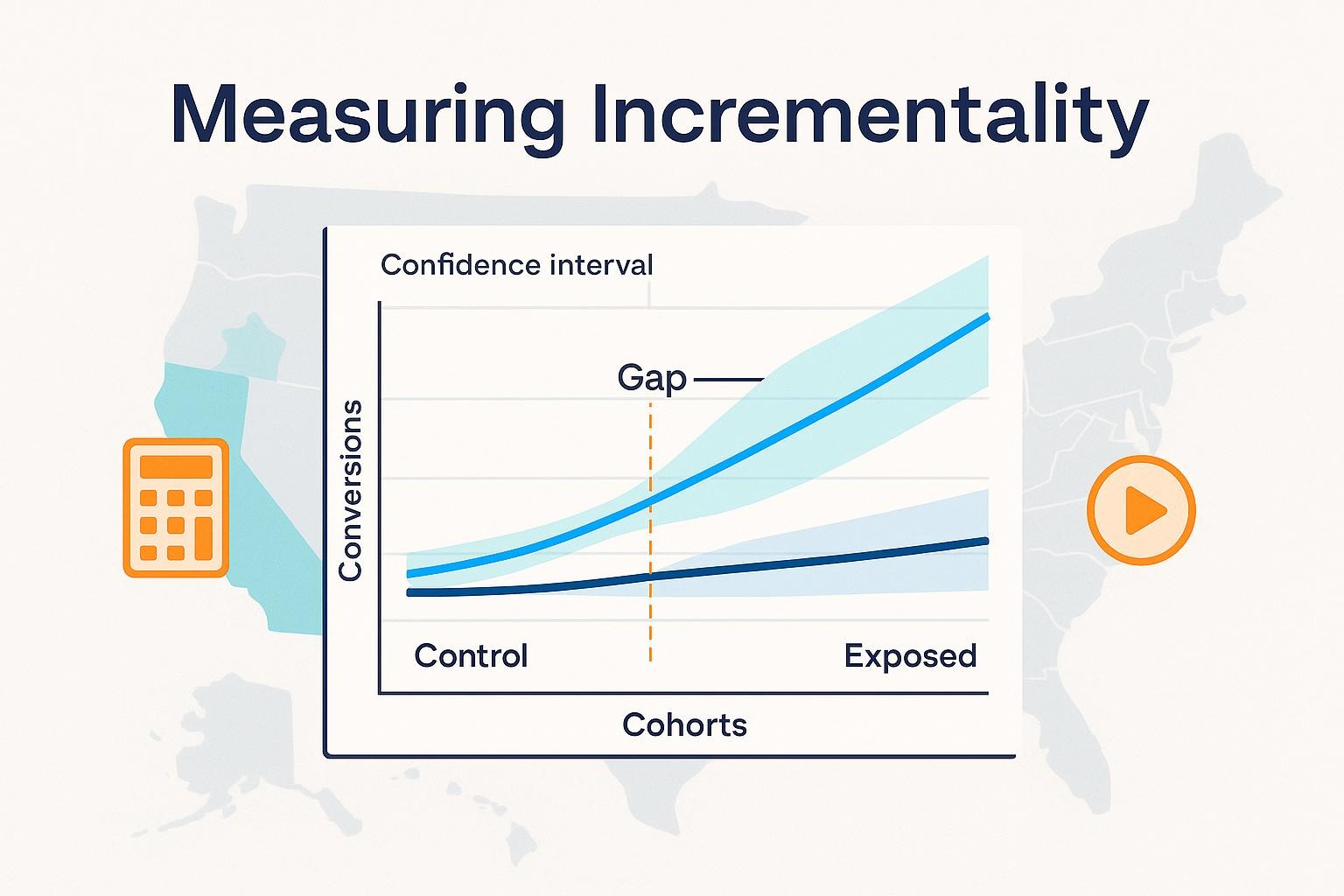
Attention: Are Your Ads Really Driving Results, or Just Getting Credit?
Here’s the truth every marketer, analyst, and growth lead faces:
Your dashboards might show rising conversions, but how much of that came from your ads—and how much would’ve happened anyway?
That’s the question incrementality testing answers.
While attribution models spread credit across channels, incrementality test ads uncover causation: what your campaigns truly changed in user behavior.
This is how performance teams move from guessing to knowing, from surface-level metrics to true ROI testing and ad performance validation.
As Think with Google puts it, incrementality is about “outcomes that wouldn’t have happened organically.”
Let’s walk through a practitioner-friendly, step-by-step guide to designing, running, and scaling your incrementality tests, so your next ad dollar drives measurable impact.
Step 1: Choose the Right Incrementality Method
There’s no single “perfect” design—only what fits your data scale, platform access, and risk appetite.
Here’s how to pick smartly:
User-Level Randomized Controlled Trials (RCTs) Platform lift studies divide audiences into exposed vs. holdout groups, tracking incremental conversions or revenue.
Great when: You have stable targeting and enough eligible audience.
Caution: Black-box reporting and limited cross-platform visibility.
Reference: Google Ads Conversion Lift setup guide.
Geo Experiments (GeoLift) You randomize spend across regions (DMAs, markets) and compare outcomes.
Ideal for: Large-scale spend or cross-channel effects.
Tooling: Meta’s GeoLift documentation explains confidence intervals and power analysis.
Ghost Ads (Auction-Based Causal Testing) In real-time bidding, ghost ads log control users who would have seen your ad but didn’t.
Efficient and low waste—no PSA spend.
Based on peer-reviewed work in the Journal of Marketing Research.
Practical example: DoorDash’s case on measuring incrementality with ghost ads.
Quasi-Experiments (Matched or Time-Based) When randomization isn’t feasible, use pre-post comparisons, synthetic control, or difference-in-differences.
Use only if random assignment is impossible.
Requires strict control for bias and parallel trends.
Pro Tip: When in doubt, favor randomization. It’s the gold standard for measuring causal impact of ads and avoiding false signals.
Step 2: Power Up Your Test — Don’t Guess
An underpowered test wastes time and budget. Before you hit “launch,” define three core parameters:
Minimum Detectable Effect (MDE): The smallest lift worth detecting.
Power (1–β): Your chance to detect that lift if it exists (typically 80%).
Significance (α): Your false-positive tolerance (usually 5%).
Example: If your baseline conversion rate is 10% and you expect a 5% relative lift, you’ll need about 30,000 users per arm to detect it confidently.
Want to check your plan?
Quick Tips:
Base calculations on your last 4–8 weeks of real data.
Power for one KPI only—treat cuts as exploratory.
Pre-register duration and avoid mid-test peeking unless you apply sequential testing.
Mini Example: A streaming app team uses a geo-lift test to measure ad lift across 20 markets. After powering for 80% confidence, they detect a +6% incremental subscription lift—justifying a 25% budget increase.
Step 3: Keep Your Test Clean
Clean design beats clever analysis. To isolate true ROI testing, lock down all moving parts.
Randomization & Isolation
In RCTs: Prevent user overlap between holdout and exposed groups.
In Geo tests: Add buffer zones between regions.
Freeze Key Variables
Keep targeting, bidding, and creatives steady.
Avoid mid-test budget shifts or algorithmic changes.
Control the Calendar
Avoid seasonal spikes or promotions.
Run tests across stable business periods.
Audit for Contamination
Exclude overlapping campaigns that might reach your holdout.
For video, cap frequency to limit spillover.
For geo tests, follow Meta’s GeoLift power and CI methodology.
Step 4: Measure and Interpret Lift Like a Scientist
Once your test ends, it’s time to turn data into insight.
Calculate Incremental Outcomes
Incremental Conversions = Exposed conversions − Control conversions (scaled).
Incremental Revenue = Exposed revenue − Control revenue.
Compute Lift and iROAS (Incremental ROAS)
Lift (%) = Incremental conversions ÷ Control conversions × 100.
iROAS = Incremental revenue ÷ Ad spend (exposed group).
Example Calculation:
Exposed users: 120,000; 10.8% converted
Holdout users: 120,000; 10.0% converted → Incremental lift = 8% If AOV = $50 and 80% of conversions are purchases, incremental revenue = $38,400. With $120,000 ad spend, iROAS = 0.32.
If lift is real but iROAS falls short, tweak audience or creative strategy before scaling.
Reference: The GeoLift confidence interval framework and CXL statistical power primer both show how to quantify uncertainty effectively.
Step 5: Apply Incrementality Insights Across Channels
Geo-Experiments
Perfect when cross-platform or offline data is needed.
Match regions by audience density and seasonality.
Use 4–8 weeks of baseline data.
Add buffer zones and control for promotional spikes.
Ghost Ads
Efficient for auction-based testing with minimal waste.
Proven approach in Johnson, Lewis & Nubbemeyer (JMR).
Mini Example:
A marketplace runs ghost ad tests in their sponsored listings, discovering a +9% incremental order rate and improving cost efficiency by 14%.
Step 6: Go Beyond Lift—Validate Creative and Channel Impact
Video campaigns, in particular, can distort causal reads. Here’s how to stay accurate:
Limit creative variants during tests to isolate variables.
Set frequency caps to avoid wear-out or spillover.
Keep sequencing consistent—test full story arcs, not fragments.
Follow Google’s integrated measurement framework for combining incrementality with MMM and platform reporting.
Mini Example: A fintech brand runs a video ad incrementality test and finds 12% higher lift from emotionally-driven storytelling creatives than pure feature explainers.
Step 7: Scale Your Learnings with MMM and Budgeting
A single test gives you truth for one campaign. Scaling means integrating it with your Marketing Mix Model (MMM).
Use Meta’s Robyn framework to calibrate MMM with lift test priors.
Compare iROAS with your breakeven ROAS to inform budget reallocation.
Re-run lift tests quarterly or after creative or targeting changes.
Mini Example:
An e-commerce team uses incrementality tests to calibrate Robyn MMM. The result? 19% more accurate channel ROI predictions and faster media reallocation decisions.
Desire: Why NemoVideo Empowers Better Ad Testing
You don’t need to be a data scientist to validate your ad performance.
With NemoVideo, you can easily:
Test ad lift on creative variants before scaling.
Automate analysis workflows for true ROI testing.
Visualize incrementality vs attribution across campaigns in one view.
It’s your creative buddy for smarter experimentation—designed to make incrementality testing practical, not painful.
Learn more about how the NemoVideo AI Video Editor helps optimize creative testing.
Action: Run Your First Incrementality Test With Confidence
Here’s your quick-start checklist:
✅ Define your KPI, MDE, and power.
✅ Pick your method (RCT, Geo, Ghost).
✅ Lock your variables and monitor clean delivery.
✅ Calculate lift, iROAS, and confidence intervals.
✅ Feed learnings back into MMM and creative planning.
Ready to move from assumption to evidence?
👉 Start your next incrementality test with NemoVideo and measure your ads’ true causal impact today.