

How to Find Winning Video Ads with AI: A Complete 2025 Guide for Creative Teams
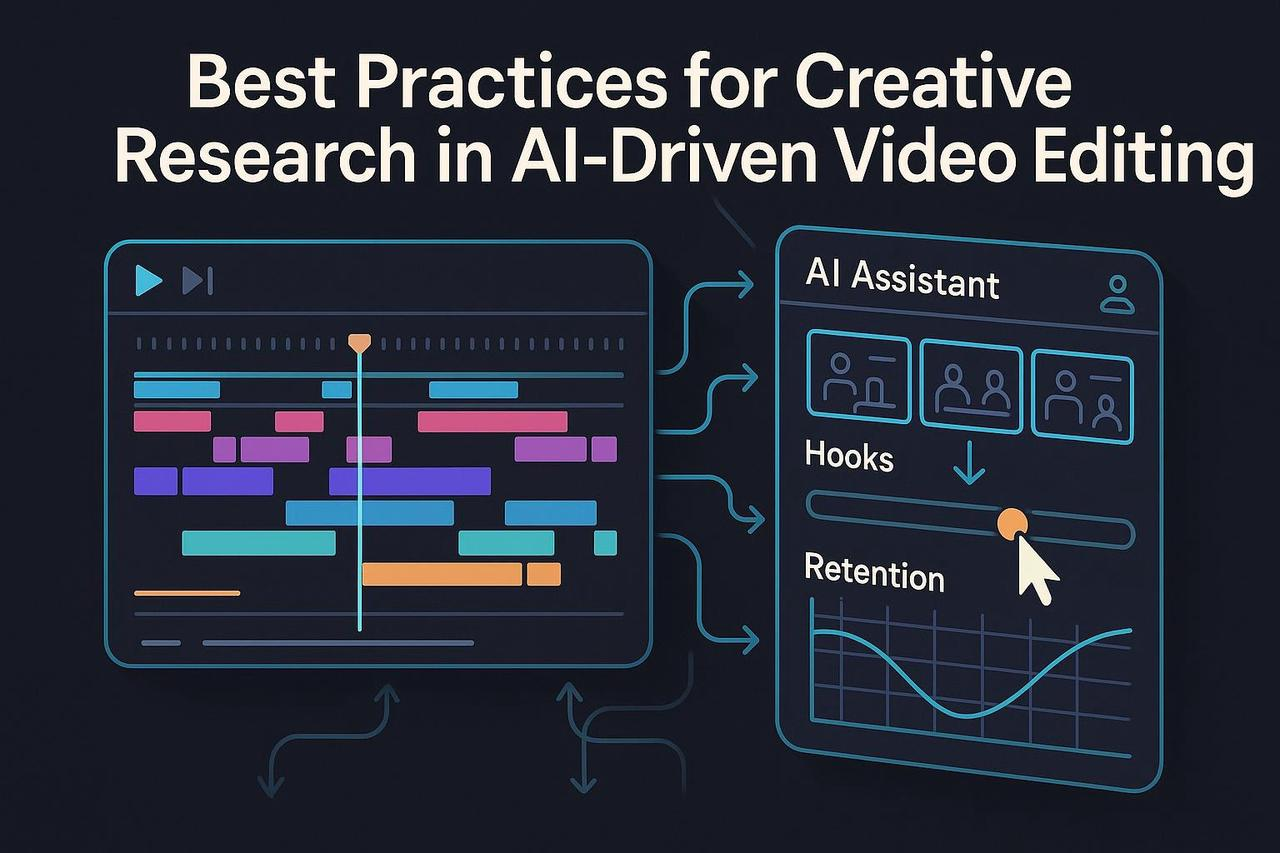
Attention: Every Marketer’s Pain—You’re Spending Big, but Which Video Ads Actually Win?
If you’ve ever launched an ad campaign and wondered, “Why did this one flop while another took off?”, you’re not alone.
Creative fatigue, inconsistent performance, and guesswork plague even the best marketing and creative teams. What separates teams who find winning video ads from those who waste spend is not luck—it’s creative research powered by AI.
In 2025, you no longer need a 10-person insights team or endless spreadsheets to identify top-performing creatives. With smart tools and a structured workflow, you can spot what works, test it faster, and scale with confidence—without losing your creative soul.
Step 1: Discover What Works—Find Signal, Not Noise
Your first job? See what’s working now, not what went viral last year.
Here’s how to do it right:
Scan YouTube Culture & Trends and Think with Google’s creative experiments.
Dive into TikTok Creative Center, Reels Explore, or Shorts’ trending sounds.
Save 30–50 video ad examples that fit your niche or goal (awareness, conversion, or retention).
Tag each for hook type, pacing, CTA, and first-frame visual.
Then, write down your non-negotiables per platform: aspect ratio, subtitle style, first-visual timing, and brand-safe topics.
Mini Example:
Imagine a SaaS team combing through Reels to find winning video ads that open with a clear pain point and visual hook in under two seconds. Within hours, they’ve built a living reference board that doubles as their next campaign brief.
Why this works: You’re researching patterns, not copying creators. It’s data-informed creativity—AI helps you spot trends, but your taste decides what’s worth keeping.
Step 2: Identify Top-Performing Creatives with AI Clustering
Once you’ve collected inspiration, let AI do the heavy lifting.
Ask your AI video assistant (like NemoVideo) to:
Cluster your ad examples by hook pattern, pacing, and tone.
Highlight visual motifs (like “face close-up + subtitle pop”) that repeat across winners.
Summarize ad performance traits—for example, “best ad benchmarks show 1.2s cuts and 3-sentence CTAs.”
Then, translate the insights into a creative decision sheet:
Preferred hook types
Pacing targets (0.8–1.2s cuts for TikTok)
Visual must-haves (human face within 0.5s)
“Avoid” rules (e.g., slow intros, dense text)
Mini Example: A cosmetics brand uses NemoVideo to identify top-performing creatives in its niche. AI flags “split-screen transformations” and “before-after” visuals as common winners—instantly reshaping their next brief.
Tip: Never copy scripts outright. Use patterns as springboards. And for generative assets, stay compliant with Adobe’s 2025 Generative AI Guidelines.
Step 3: Use Structured Ideation to Scale Creative Ideas
Random brainstorming is dead. The best teams use structured ideation frameworks to scale creativity intentionally.
Start with these:
Hooks: Generate 20+ variants—“myth-bust,” “tiny tutorial,” “visual twist,” or “POV confession.”
Formats: “Problem → empathy → quick win” or “Unboxing → reveal → CTA.”
Narrative beats: Apply a simple flow—Arouse → Build → Convince → Direct.
Use AI to suggest variants but keep your first five seconds handcrafted.
Mini Example:
A fintech marketer asks AI to generate proven video ad examples using the “tiny tutorial” format. Within minutes, they get 15 variants—one becomes their best-performing LinkedIn ad with a 22% higher CTR.
Remember, constraints drive creativity. Feed your AI tool rules from your synthesis phase to keep ideas sharp and on-brand.
Step 4: Prototype Fast and Test Early
Perfection kills velocity. You don’t need broadcast polish to validate an idea—just clarity and pacing.
For rapid prototyping:
Use NemoVideo to convert scripts or briefs into rough AI video cuts.
Adjust hooks and pacing automatically, then preview platform-specific versions (Reels, Shorts, LinkedIn).
Watch the first 3 seconds at 0.75x and 1.25x speeds to test retention.
Mini Example:
A B2B SaaS team uses NemoVideo to turn their product walkthrough into a 60-second creative test. In one click, it creates platform-ready versions, captions, and subtitles—saving an entire production cycle.
Step 5: Validate and Track Ad Performance Like a Scientist
Finding winners means running disciplined experiments, not chasing “gut feel.”
Here’s how to do it right:
On YouTube, use Video Experiments for clean split tests (Think with Google guide).
On TikTok, follow official split testing best practices.
On Meta, align your creative tests with AI media labeling policies.
Pro tips:
Define success before testing (e.g., -15% CPV, +10% CTR).
Don’t edit tests mid-flight; it breaks confidence.
Watch retention curves—if viewers drop at 2–3s, fix your hook or first frame.
Mini Example:
A gaming app’s growth team runs three 12-second variants. One variant shows a “player reaction” in frame one, and its CTR jumps by 28%. The insight? Emotion outperforms text-first intros every time.
For full platform comparisons, review Navattic’s 2025 Interactive Demo Report.
Step 6: Scale What Wins Without Losing Your Edge
Once you find your winners, version them smartly:
By placement: 9:16 for TikTok/Reels, 1:1 for Feeds, 16:9 for YouTube.
By audience: Adjust voiceover, subtitle language, or CTA wording.
By goal: Awareness cuts vs. performance-focused retargeting.
Track results in an ad performance tracker spreadsheet—note hook type, thumbnail, and platform.
Mini Example:
A creative agency scales a high-performing ad from Reels to YouTube Shorts using NemoVideo’s AI-driven editor to auto-adjust pacing and crop. Engagement stays consistent across platforms.
Keep tests small but steady—1–2 new variants weekly beats one big refresh per quarter.
Step 7: Stay Ethical, Compliant, and Future-Proof
Creative innovation and policy go hand in hand.
YouTube: Disclose realistic AI-generated scenes as per YouTube’s 2024 AI disclosure.
TikTok: Label AI-generated content under TikTok’s guidelines.
Meta: Expect “Made with AI” tags across all surfaces (Meta 2024 policy).
Adobe: Follow the Adobe GenAI user terms for commercial projects.
Transparency isn’t optional, it builds trust and keeps your brand future-proof.
Step 8: Turn Creative Research into a Repeatable Flywheel
Finding winning ads isn’t luck. It’s process.
Run this weekly loop:
Discover → Scan 3–5 new video ad trends daily.
Synthesize → Update your creative decision sheet weekly.
Ideate → Generate 10–20 hooks and scripts.
Prototype → Cut 2 quick versions with NemoVideo.
Validate → Run 1 A/B test and document results.
Scale → Version the winner and re-test pacing or hook.
Mini Example:
An e-commerce brand runs this loop weekly. Within two months, their average CTR rises 31%—and their team finally knows why each video performs.
Desire: Why NemoVideo Makes Creative Research Effortless
With NemoVideo, you don’t just analyze—you act.
It’s your AI Creative Buddy, turning raw ideas into polished prototypes in minutes:
Starts from links or briefs—no blank page.
Suggests creative hooks based on real performance data.
Auto-generates cuts for multiple platforms.
Handles captions, pacing, and accessibility in one flow.
Imagine finding winning video ads faster, while spending more time on storytelling—not software.
Action: Run Your First AI Creative Sprint
You’re now ready to:
✅ Discover top-performing video ad examples
✅ Identify creative patterns that win
✅ Test and scale with real data
Start your first AI-powered creative sprint with NemoVideo today.
👉 Try NemoVideo for free and start finding your next winning ad in minutes.
Key Takeaways
Use AI to find winning video ads, not just trends.
Build a living creative library of proven ad examples.
Validate ideas with split tests and track results.
Scale what works across platforms—intelligently.
Stay compliant with ethical and labeling standards.