

Ethical AI Video: The 2025 Playbook for Responsible Creativity
If you’re leading creative production or content marketing in 2025, you already know the tension: You want to move fast, stay creative, and still ensure that every frame you ship aligns with responsible AI in media standards.
The good news? Ethical AI doesn’t have to slow you down. With the right systems in place, it can protect your brand, empower your team, and make your creative pipeline stronger, safer, and faster.
This is your practical playbook to build ethical AI video workflows that stand up to scrutiny—and still ship on time.
Attention: The Real Risk of “Move Fast and Break Things”
When creative teams rush AI video production, the damage isn’t just technical—it’s reputational.
Unclear disclosures, unlicensed material, biased outputs, or hidden AI use can all lead to:
Loss of audience trust
Legal scrutiny under new transparency laws
Platform takedowns or demonetization
That’s why the next generation of creative leaders is focusing on AI transparency in content and building safe AI video tools into every step.
Tools like NemoVideo make that shift easy: it lets you automate ethically—without losing your creative rhythm.
Interest: Building an Ethical AI Workflow That Actually Works
Let’s make this concrete.
Here’s how top teams are bringing ethics into everyday video creation without slowing down.
Start With Governance, Not Guesswork
Ethics in AI video isn’t just about good intentions—it’s about structure. Before you generate anything, build a governance backbone that defines who owns what.
Keep your team lean and clear:
AI Ethics Lead: Reviews risks and disclosures
Legal/IP Counsel: Handles licenses and take-downs
Data Privacy Lead: Oversees consent and transfers
Creative Ops: Implements checkpoints and templates
Tooling/Engineering: Enables provenance, watermarking, and logging
These roles work best when mapped to the NIST AI Risk Management Framework. If you want certification-grade structure, align with the ISO/IEC 42001 AI Management System.
Why it matters: You make ethical approval part of your workflow—not an afterthought.
Protect Faces, Voices, and Data From Day One
AI video isn’t neutral when it touches people’s likeness. Use a clear consent kit for every talent, creator, or partner. Include:
Scope: Channels, geographies, AI use allowed or not
Duration & rights: Renewal and revocation process
Permissions: Voice cloning or synthetic backgrounds
Storage: Data location and retention policy
Keep all consent records linked to your video assets.
And remember: The FTC’s rule on fake reviews bans misleading endorsements and synthetic personas.
Be transparent, and your audience will reward you with trust.
Avoid Bias in AI Content
Bias doesn’t just happen in data—it happens in decisions.
If your AI is picking “best shots,” “most engaging faces,” or “ideal thumbnails,” it’s shaping your narrative.
Here’s how to spot and reduce bias:
Diverse Inputs: Check representation across footage or training data
Bias Audits: Review output sets at each milestone
Interpretability: Understand why the AI chose a specific shot
Document each audit in your workflow—just like you would track quality control.
You can model your checks on NIST’s Generative AI Profile fairness actions.
Transparency and Provenance: Make the Invisible Visible
Trust grows when you show your hand. That’s where content authenticity comes in.
Use a 3-layer approach:
Visible Disclosure: Add end-card text like “This video includes AI-generated backgrounds.” Learn more in EPIC’s guide on AI disclosures.
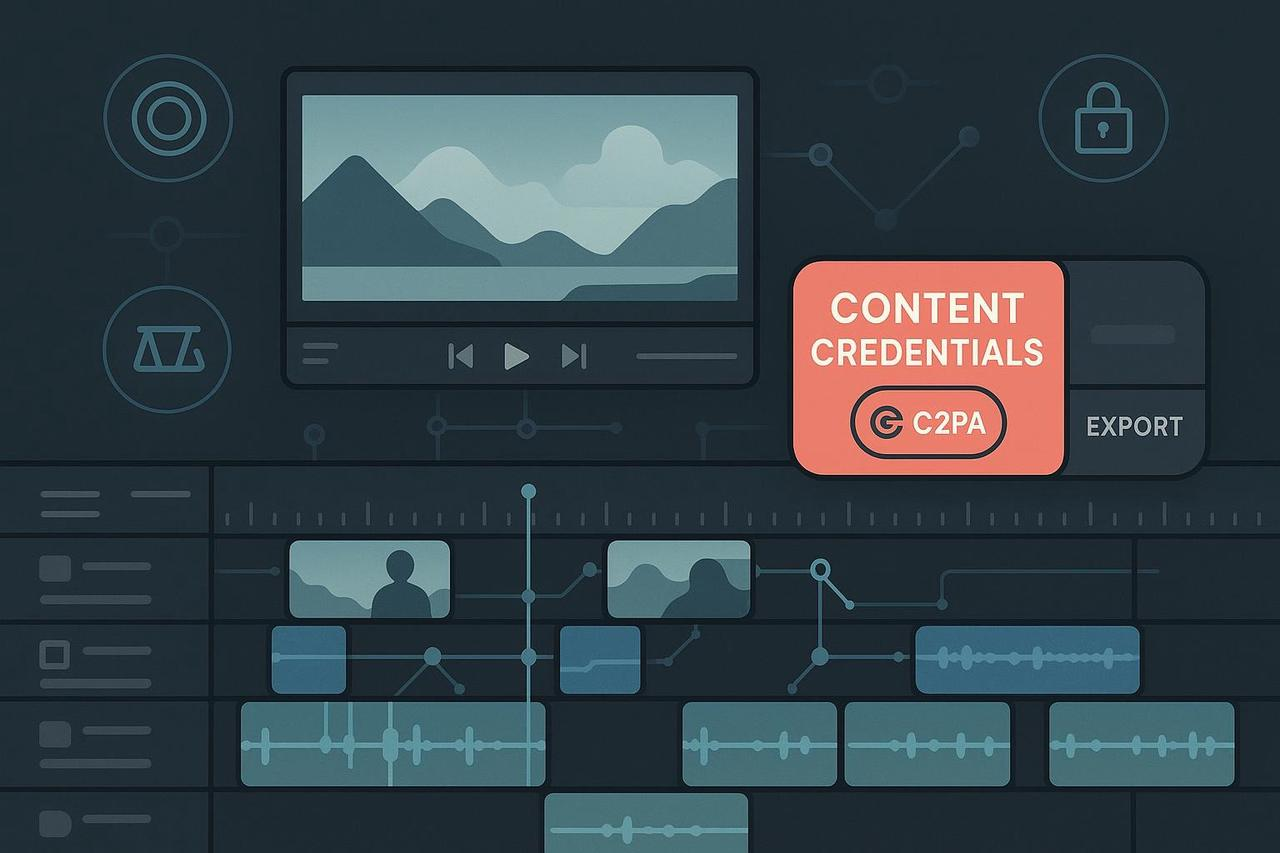
Machine Credentials: Export videos with C2PA Content Credentials. These include authorship, model details, and edit history.
Invisible Watermarks: Reinforce with Google SynthID’s invisible safeguards.
Together, these steps help you comply with EU AI Act Article 50 transparency obligations.
Creative Integrity Meets Copyright
You can’t claim “responsible AI in media” if your base materials aren’t clean.
Keep a data provenance sheet for every project:
Source licenses for stock, training sets, and music
Reverse-search to avoid duplicates or scraped content
Include creator credits in your C2PA manifest
When disputes arise, follow a clear removal process and log every step. For deeper context, review the European Parliament study on GenAI and Copyright (2025).
Desire: Empower Creativity Without Losing Control
Ethical doesn’t mean slower—it means smarter.
When teams integrate ethical automation into creative workflows, they:
Ship faster because reviews are frictionless
Protect brand credibility automatically
Unlock global compliance from day one
Tools like NemoVideo’s AI Video Editor make this seamless:
Auto-tag content provenance and credentials
Streamline bias checks via built-in metadata
Apply disclosures on export by default
Your creative process becomes transparent, compliant, and future-proof.
Real-World Example: Transparent Short-Form Ads
A global ad agency using NemoVideo automated 80% of its ethical compliance tasks:
Nemo identified clips needing consent and AI labels
The editor embedded C2PA credentials automatically
Legal teams could audit provenance logs in seconds
Result:
✅ 60% faster delivery
✅ 100% disclosure accuracy
✅ Zero takedowns or disputes
That’s what ethical creative automation looks like in action.
Action: Build Your Ethical AI Video Workflow
Here’s how to start today:
Publish your AI use policy and consent template
Enable C2PA export in your video stack
Audit outputs for fairness and disclosure accuracy
Test incident response for deepfake or misuse cases
You can map your response framework to the OWASP GenAI Incident Response Guide and NIST CSF 2.0.
Want a faster way?
👉 Try NemoVideo and build ethics directly into your creative workflow—no extra approvals, no lost time.