

NemoVideo vs. Creatify: The Best AI Ad Generator for Agencies
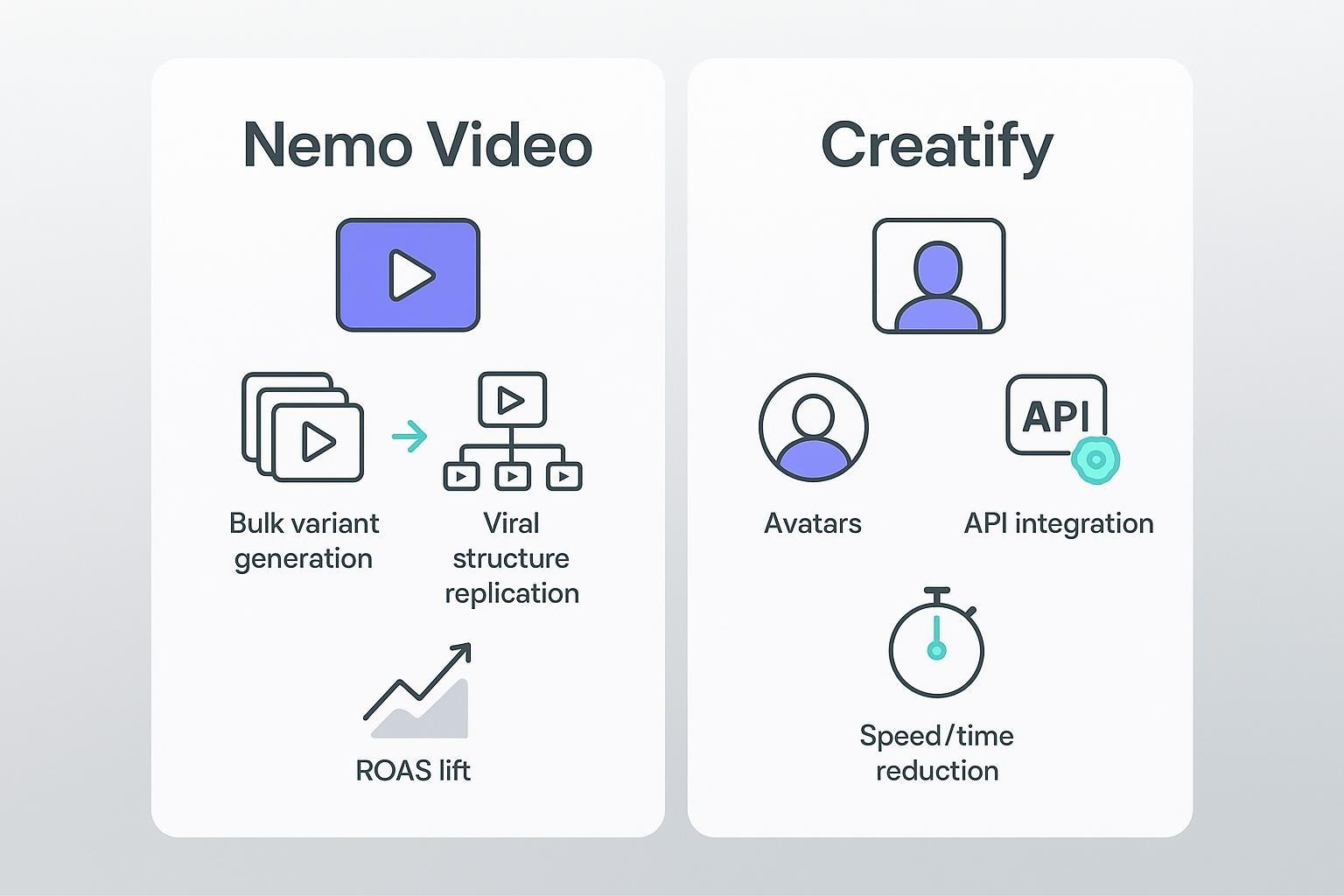
If you run an agency, the brief rarely changes: ship more short-form ads, faster, at lower cost—and keep ROAS trending up. In this comparison, we look at two AI tools built for that exact pressure: NemoVideo and Creatify.
Disclosure: NemoVideo is our product. We’ll keep this review neutral and scenario-based so you can choose what fits your clients and workflows.
The quick snapshot (agency lens)
Dimension | NemoVideo | Creatify |
Who it’s for | Teams working with existing footage who want to replicate proven viral structures, automate repetitive edits, and output many tailored versions fast. | Teams producing net-new, avatar-led short ads with script generation, batch variants, and direct publishing workflows. |
Strengths | Viral structure replication; AI-driven selection/pacing; bulk versioning for multi-platform distribution. | Public pricing; large avatar/TTS libraries; Batch Mode for variants; API and TikTok publishing route. |
Constraints | Pricing not publicly listed; collaboration/integration details to be confirmed; limited public benchmarks. | Advanced editing depth can feel templated; scripts often need polish for premium brand voice; export queues may introduce delays. |
Pricing status | Not publicly available (contact sales). | Transparent tiers as of late 2025; Free/Starter/Pro/Enterprise. See official pricing. |
Best-fit scenarios | Footage-led edits where creative automation trims cycles and variant scale matters. | UGC/avatar-led ad programs where speed, batch generation, and platform handoffs are key. |
Side-by-side decision guide: who should choose what
Choose NemoVideo if:
You work mainly with client footage and need to replicate proven viral structures while automating tedious editing (key visual selection, pacing) so editors can focus on creative decisions.
Your priority metric is variant throughput from a single core cut—tailored versions for audiences/platforms without spending hours on manual trims.
You want to reduce time and cost per deliverable by leaning on automation for the repetitive parts of editing.
Choose Creatify if:
You produce net-new, avatar-led, short-form ads and value one-click script generation, voiceovers, and rapid batch variants for A/B testing.
You need transparent, credit-based pricing and an API for integrating creative generation into your internal tools.
You want direct publishing routes to platforms like TikTok, plus multi-language support for cross-border campaigns.
Mixed-stack recommendation:
Use Creatify for avatar-led UGC ads and quick variant ideation, then refine the strongest angles with footage-led edits in Nemo Video to elevate brand polish. This combo can give you both velocity and quality across different client profiles.
Hero metric 1: A/B variant velocity that can lift ROAS
How both tools help you move faster through variant matrices (hooks × offers × CTAs × lengths):
Nemo Video: Starting from a solid footage-based cut, automation handles repetitive edits—detecting key visuals, optimizing pacing, and assembling multi-platform versions. That makes it easier to spin up many targeted variants without re-editing everything by hand. In practice, this supports larger matrices (for example, 12 hooks × 3 offers × 2 lengths) while keeping editors focused on creative decisions rather than mechanical trimming.
Creatify: Net-new ad generation is its sweet spot. You can generate scripts, select avatars/voices, and use Batch Mode to produce many variants quickly, then push drafts toward TikTok or export for Meta. For agencies, this means faster time-to-first-draft across multiple creative angles.
Evidence you can verify:
Creatify’s Batch Mode is described for multi-variant creation and split testing by the official page in Creatify — Batch Mode (noted in 2025).
Creatify’s large avatar library and TTS capabilities are detailed on Creatify — AI Avatar features (as of 2025), helpful for UGC-style ads without needing on-camera talent.
For platform handoffs, Creatify has a TikTok Ads App Center listing at TikTok — Creatify AI App Center (seen in 2025), indicating a publishing route to TikTok Ads Manager.
For Nemo Video, the mechanism is different—less about generating scripts/avatars and more about accelerating edits on footage you already have, then scaling to many versions. If your clients provide raw assets or you maintain a branded footage library, this can be a meaningful speed advantage without compromising brand authenticity.
Hero metric 2: Production speed and cost reduction per deliverable
Where Nemo Video can cut time/cost:
Automates mechanical edits (key visual selection, pacing, footage assembly) so editors spend less time on tedious tasks.
Bulk versioning helps you produce platform-specific cuts (ratios, captions) and audience-tailored messages from one master edit, reducing rework.
Where Creatify can cut time/cost:
Generates net-new creative quickly—scripts, avatars, voices—so you can produce testable drafts without shoots.
Batch Mode streamlines A/B testing; the API can slot into your internal workflow tooling to reduce manual steps.
Constraints to factor:
Nemo Video: Pricing is not publicly listed at the time of writing; collaboration/integration details are to be confirmed. If you require strict role-based approvals or specific ad-platform integrations, validate those needs with sales.
Creatify: Advanced editorial control can feel limited versus a traditional NLE; scripts often need brand-voice polish; queue delays can slow exports during peak usage.
A mini, realistic case: DTC apparel sprint (72 variants)
Scenario: A DTC apparel client wants a 3-day sprint to test 12 hooks × 3 offers × 2 lengths = 72 short-form variants across TikTok and Instagram.
With Nemo Video (footage-led):
You assemble a strong master cut from existing product and lifestyle footage. The AI handles repetitive trimming, selects key visuals, and paces the edit. Bulk versioning outputs vertical and square cuts with tailored captions.
Editors concentrate on creative differences (hook lines, offer overlays, CTA frames) rather than manual slicing, which keeps consistency and speeds up delivery.
Expected outcome: faster variants from a single master, with brand-faithful visuals. You measure ROAS changes by grouping variants by hook type and offer, then reading platform performance after 48–72 hours.
With Creatify (avatar-led):
You generate scripts for each hook, choose avatars/voices, and use Batch Mode to create a high volume of variants quickly. Drafts can be sent toward TikTok or exported for Meta campaigns.
Creative leads review top-performing angles, then refine copy/visuals where needed to match premium brand voice.
Expected outcome: very rapid time-to-first-draft for dozens of variants without a shoot. ROAS analysis focuses on which hooks/offers get the strongest thumbstop and conversion behavior.
In practice, many agencies run both: use Creatify to explore many angles fast, then bring the winners into footage-led edits with Nemo Video for higher polish and durable brand alignment.
Collaboration, integrations, and pricing (what’s publicly documented)
Creatify pricing: As of late 2025, tiers are Free (with watermark and limited credits), Starter, Pro, and Enterprise. See Creatify — Pricing, and confirm plan details and renewal policies via Creatify Help Center — Pricing Plans (both referenced in 2025).
Creatify integrations and API: Publishing to TikTok is indicated by the App Center listing mentioned above; for developer needs, endpoints and usage are covered in Creatify Docs — API Reference (accessed in 2025). Meta publishing is promoted in marketing copy, but a formal partner/API listing was not identified in public docs—validate with sales.
Nemo Video pricing and integrations: Pricing is not publicly available at the time of writing; collaboration roles and specific platform integrations are to be confirmed. If your agency depends on strict governance (roles, approvals, audit trails), or direct ad-platform publishing, discuss requirements during your demo.
Pros and cons recap
Nemo Video
Pros: Viral structure replication; automation of repetitive editing tasks; bulk versioning for multi-platform distribution.
Cons: No public pricing yet; collaboration/integration details not published; limited public benchmarks.
Creatify
Pros: Transparent pricing; extensive avatar/TTS libraries; Batch Mode for rapid variants; API; TikTok publishing route.
Cons: Editing depth can feel templated for premium brands; scripts need polish for brand voice; possible queue delays; Meta publishing claims not formally documented.
Bottom-line verdicts by scenario
Best for footage-led, brand-faithful campaigns demanding many platform-specific versions: Nemo Video.
Best for avatar-led UGC programs needing net-new drafts and fast A/B variant generation with transparent pricing: Creatify.
Best mixed-stack: Creatify for ideation speed + Nemo Video for premium polish on winning angles.
If you’re unsure, run a controlled 2-week A/B sprint. Define your variant matrix, cap spend per angle, and compare time-to-first-draft, editor hours, and ROAS. Your agency’s constraints (footage availability, brand voice sensitivity, platform mix) will reveal the better fit quickly.
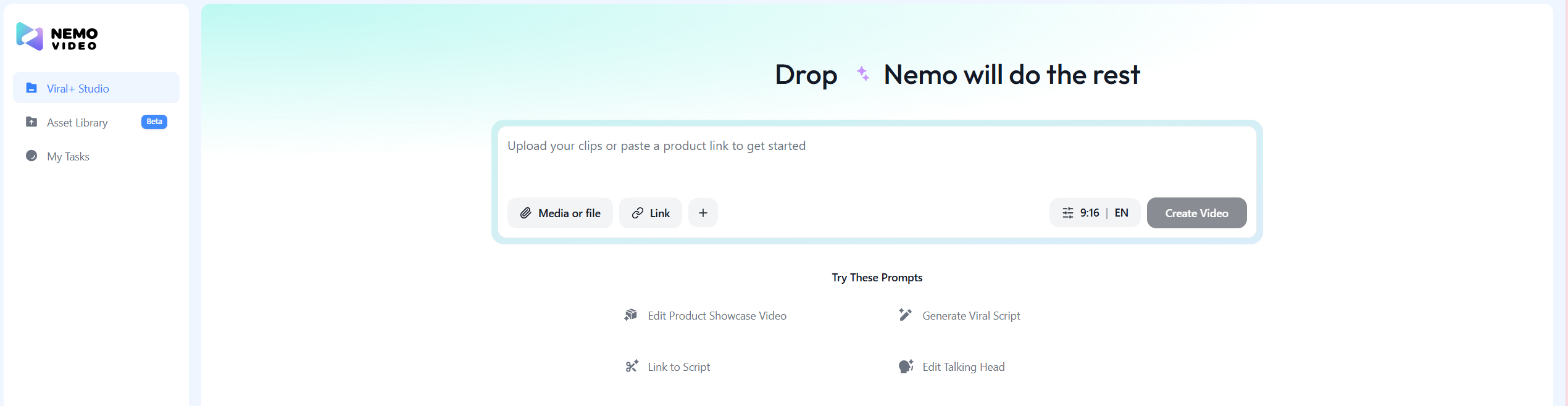
Ready to pressure-test this with your team? Start a hands-on trial with NemoVideo and benchmark your variant throughput and editorial time savings on a real client brief.
The fastest way to know what works is to test it. Run a real A/B sprint in NemoVideo using your existing footage and see how automation unlocks more hooks, more cuts, and more learning, without ballooning production costs.