
Brand Safe Video Ads: How to Protect Your Reputation and Power Creative Freedom
Introduction: The Cost of Unsafe Ads
Your ad goes live, and within hours, it’s running next to conspiracy videos or explicit memes. Comments explode, credibility drops, and your media budget burns in damage control.
That’s the reality many brands face when brand safe video ads aren’t part of their creative planning.
In a world where video moves faster than review teams can blink, ad safety checks and video content moderation aren’t just compliance chores, they’re creative insurance.
This guide breaks down how to avoid risky content, build compliant video creatives, and use smart automation (like Nemovideo’s AI Video Editor) to ensure every campaign aligns with your brand’s values, without slowing you down.
Step 1: Understand Brand Safety vs. Brand Suitability
Brand safety keeps your ads away from universally unsafe content—hate speech, explicit material, misinformation, or violence.
Brand suitability, on the other hand, adjusts safety filters to fit your brand’s personality, audience, and comfort zone.
Concept | What it covers | Controls | When to use |
Brand safety | Avoids universally unsafe content (illegal, hateful, explicit) | Platform filters, exclusion lists, verified publishers | Always-on baseline |
Brand suitability | Tailors risk levels to brand tone | Inclusion lists, sentiment controls, contextual tiers | Customize by campaign type |
Example: A global cosmetics brand might allow bold language in beauty tutorials but block content flagged for political discussions. A family-oriented brand, meanwhile, may prefer to avoid risky content altogether, even if it’s technically “safe.”
For shared definitions, see IAB’s Brand Safety and Suitability Guide and the GARM Brand Safety Floor Framework.
Step 2: Why Brand Safe Video Ads Matter
Protect your reputation A single misplaced ad near misinformation or violence can undo months of brand-building.
Prevent wasted ad spend Unsafe placements can be blocked post-bid or deliver poor engagement, wasting your budget.
Ensure brand alignment Consistent controls make it easier to scale across YouTube, TikTok, Meta, and CTV while keeping your values intact.
Example: A travel brand once found its pre-roll ad playing before disaster footage. The issue wasn’t the campaign, it was missing suitability filters. After applying ad safety checks, their view-through rates improved by 23% without losing reach.
According to IAB’s research on trusted media environments, ads in quality, brand-safe contexts perform up to 74% better in favorability and recall.
Step 3: Build a Smart Control Toolkit
The best marketers build guardrails that protect creativity, not stifle it. Here’s how to make your video ecosystem safe and scalable:
✅ Core Brand Safety Tools
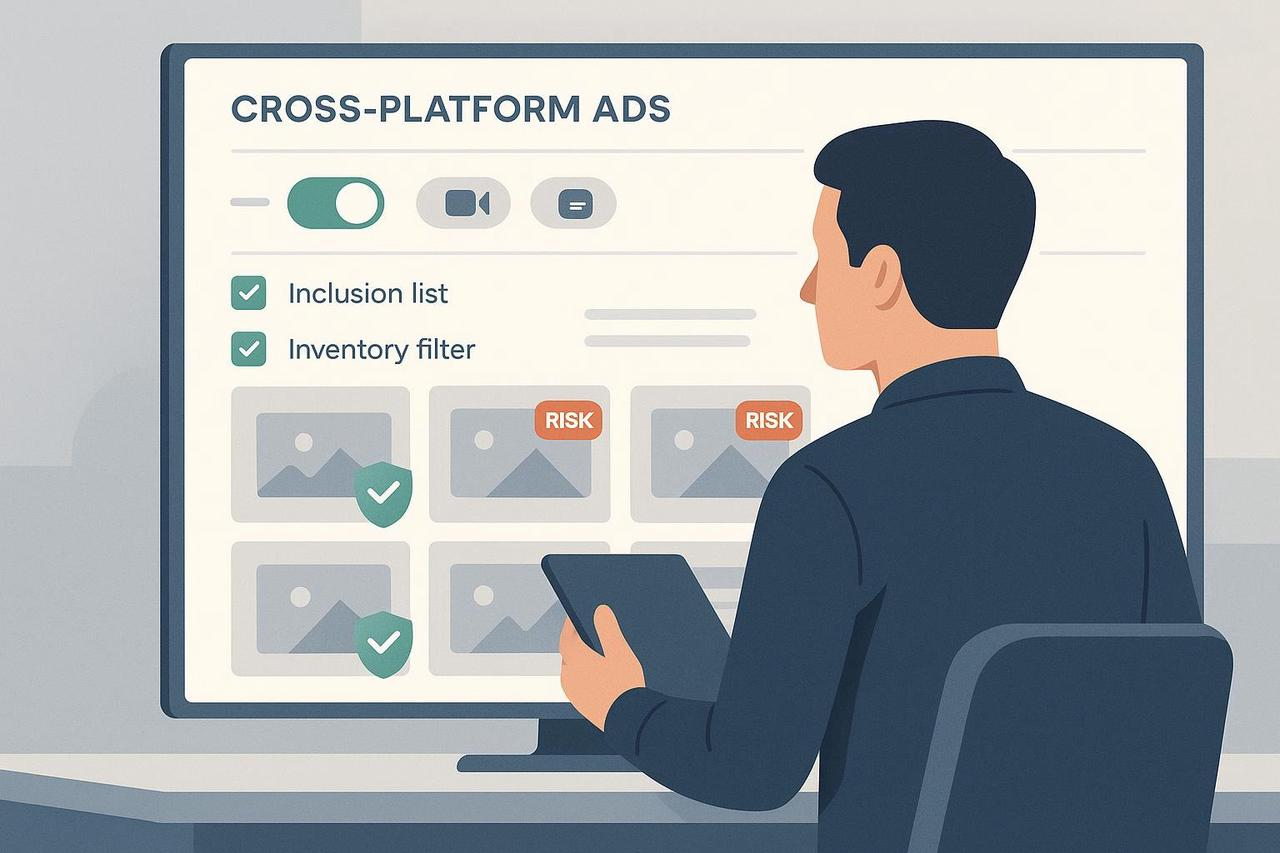
Inventory filters: Set ad platforms (YouTube, Meta, TikTok) to exclude high-risk content automatically.
Inclusion lists: Prioritize vetted publishers, influencers, and creators whose tone matches your brand.
Exclusion lists: Remove unsafe channels or keywords—but review quarterly to avoid blocking legitimate content.
Contextual and sentiment filters: Use the IAB Tech Lab’s Content Taxonomy to classify content contextually, and layer sentiment detection to refine placement.
Third-party verification: Choose vendors accredited by the Media Rating Council.
Real-time monitoring: Track performance and alert teams when a placement or creator crosses new risk thresholds.
Example: A fashion retailer created compliant video creatives using Nemovideo’s automated scene detection. It removed background clips flagged as “mildly explicit,” saving hours of manual review while ensuring every reel passed brand-safety checks.
Step 4: Balance Reach and Risk
Going “too safe” can limit creative expression and audience reach.
Instead of one-size-fits-all filters, customize by campaign:
Educational content: Allow news-related themes but exclude political commentary.
Lifestyle or influencer collaborations: Broaden settings while running stronger ad safety checks on creator uploads.
Product promos or youth campaigns: Stick to stricter suitability tiers and approved creator lists.
Example: A global beverage brand used Nemovideo to version one ad across three suitability levels, family-safe, entertainment, and edgy influencer. Each was edited automatically for tone and context, maintaining brand alignment without creative bottlenecks.
This flexible strategy echoes the WFA’s suitability matrix, which encourages calibration instead of blanket censorship.
Step 5: Avoid Common Pitfalls
Even seasoned teams can make costly mistakes. Here’s how to steer clear:
Pitfall 1: Over-relying on keyword blocklists Blocking words like “news” or “war” can accidentally exclude credible journalism and limit impressions. A 2020 IAB study found that responsible news content actually boosts trust metrics.
Pitfall 2: Ignoring made-for-advertising (MFA) sites The ANA’s 2023 programmatic study found 15% of ad spend wasted on MFA inventory. Counter this with inclusion lists and verified supply.
Pitfall 3: Static governance “Set and forget” safety settings don’t work. Update exclusion lists quarterly and adjust controls when launching in new regions or formats.
Example: A gaming brand’s ad team noticed rising placements on MFA sites. By applying a new inclusion list and video content moderation workflow, they redirected spend to verified creators—improving completion rates by 31%.
Step 6: Platform-Specific Ad Safety Checks
Each platform offers its own toolkit for managing brand safe video ads.
YouTube & Google Ads
Set account-level exclusions early.
Use “inventory type” filters to define suitability tiers.
Track creator performance regularly to refine inclusion lists.
Meta (Facebook/Instagram)
Apply topic/category exclusions in Business Manager.
Align with Meta’s Advertising Standards.
TikTok
Use TikTok’s safety hub to manage vertical sensitivity and verified creators.
Create “trusted creator” allowlists and review monthly.
Example: A retail brand automated creator verification through Nemovideo’s metadata tagging. When creators uploaded clips, AI flagged any content mismatch with brand tone—saving the team from manual review chaos.
Step 7: Create a Culture of Brand Safety
The strongest safeguard is a team that understands it’s everyone’s responsibility.
Embed brand safety in every stage of production:
Pre-production: Define what’s off-limits (visuals, language, music).
Production: Apply ad safety checks while editing or uploading.
Post-production: Review analytics for audience sentiment and content alignment.
Example: A fintech brand used Nemovideo’s AI prompts to quickly edit user testimonials. The AI removed clips with background profanity and added on-brand captions automatically—keeping their campaign compliant without slowing down launches.
For more workflow insights, explore Nemovideo’s AI Video Editor tool.
Step 8: Turn Safety Into a Creative Superpower
Brand safety isn’t about censorship—it’s about creative control with confidence.
With Nemovideo, you can:
Automate moderation and approvals
Edit multiple compliant versions in minutes
Protect your brand while keeping your creative voice
Start producing brand safe video ads that audiences trust, and your legal team loves.
👉 Try Nemovideo and make every creative safe, scalable, and stunning.